
The evolving digital media landscape and the critical security challenges it presents
This blogpost is part of a series summarising presentations from the Netnod Meeting 2026. Follow the links at the end of this post for the full presentation.
From antennas to apps
For decades, public broadcasting relied on a relatively simple model: a state-owned terrestrial network over which broadcasters had a high degree of control. Today, that landscape has fundamentally changed. Installing television antennas is increasingly rare, while the mobile phone has become the primary device for consuming news.
This shift is especially clear among younger audiences: around 90% of those in their 20s say they rely on their phone during a major news event; 43% of those aged 15-24 prefer accessing news through video.
At the same time, around 70% of the Swedish population uses digital platforms such as SVT Play or SVT News weekly. During major national events, audiences instinctively turn to SVT for trusted news. However, this trusted position also makes SVT a prime target for hostile actors seeking to disrupt society.
Surviving major cyberattack
In June 2025, SVT was subjected to the most severe cyberattack in its history. Despite the intense pressure and targeted attempts to find vulnerabilities, the organisation managed to keep its news and programming on air.
A key factor was seeking support early and cooperating closely with organisations such as the Swedish Civil Contingencies Agency (MSB) and private-sector partners, including ISPs.
One important lesson was the need to balance perfection with speed. During a crisis, delivering accurate and essential information matters more than producing a polished broadcast. To maintain public access to news, SVT deployed a simplified backup news site.
Transparency also proved critical. Staying silent during an outage risks fuelling conspiracy theories and playing directly into the hands of antagonists.
Disinformation and redundancy
Beyond direct cyberattacks, public broadcasters increasingly face the challenge of AI-generated disinformation. A recent study found that 45% of answer from AI tools contained errors that included fabricated quotes, links to sources that did not exist, or satire presented as factual news content.
In response, SVT has expanded “SVT Verify,” a specialist team of expert journalists using open-source intelligence techniques to verify videos and debunk falsehoods. The team not only investigates and reports but also explains its methods helping others understand and verify the process themselves.
SVT has also expanded its local presence significantly, growing from 27 to 50 local offices. This expansion recognises that in times of crisis—as clearly seen following the full-scale invasion of Ukraine—citizens need accurate information about their immediate, local surroundings and essential services.
This decentralised structure also improves operational redundancy. If major broadcasting hubs are compromised, SVT can continue transmitting from its local offices.
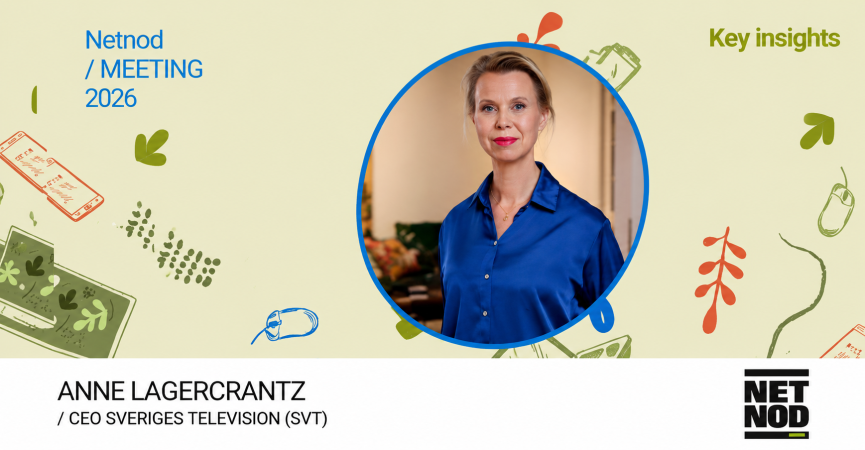
You can watch Anne Lagercrantz's presentation from the Netnod Meeting 2026 here (which includes a Q&A with Netnod’s Patrik Fältström). The slides from the presentation are available here.